
Indian folk art workshops in Mumbai — Madhubani to Warli, taught from scratch
Eight traditional art forms from eight parts of India, each taught in a single afternoon by a host who breaks the pattern down stroke by stroke. You do not need to draw. You need two hours and a weekend afternoon in Powai.
What's on
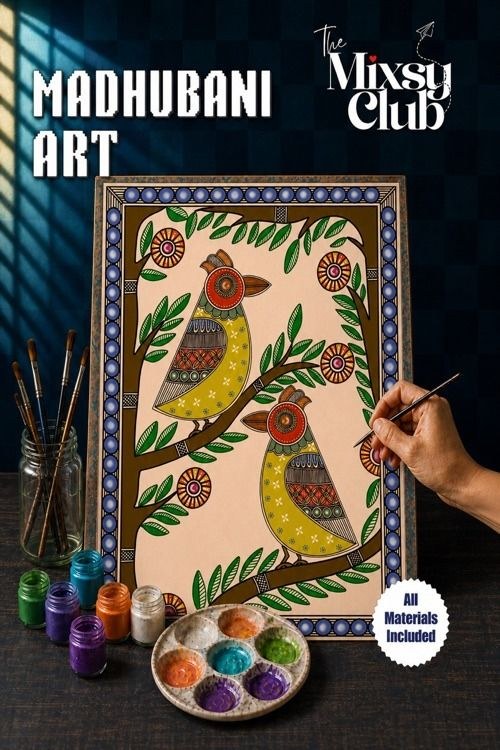
Madhubani Art
Explore the vibrant heritage of Bihar at our Madhubani Art Workshop.
See dates & book →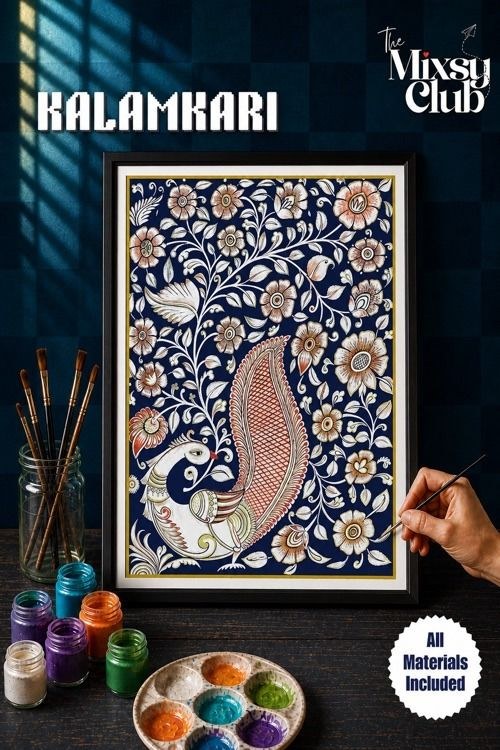
Kalamkari Art
Discover the timeless beauty of traditional Indian textile art at our Kalamkari Art Workshop.
See dates & book →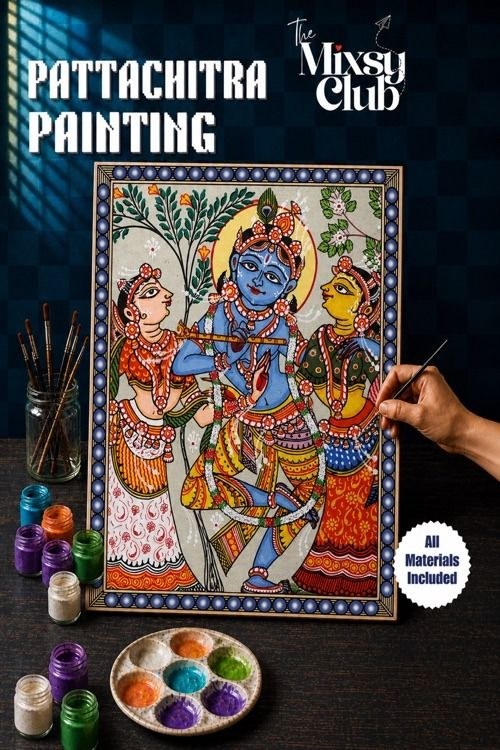
Pattachitra Painting
Discover the timeless beauty of Odisha's traditional art at our Pattachitra Art Workshop.
See dates & book →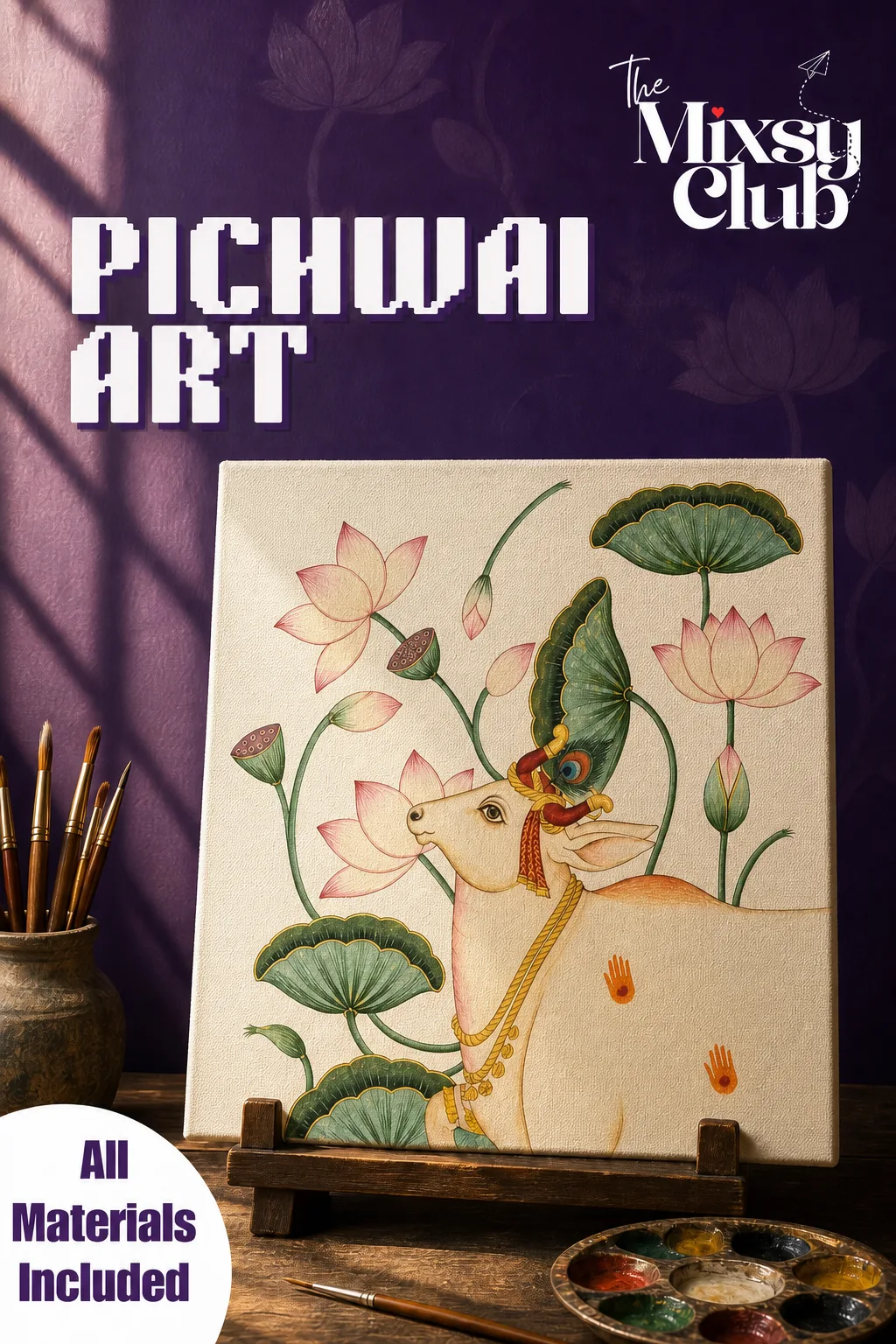
Pichwai Art
Paint elegant Pichwai art inspired by lotus, cows and rich Indian heritage motifs
See dates & book →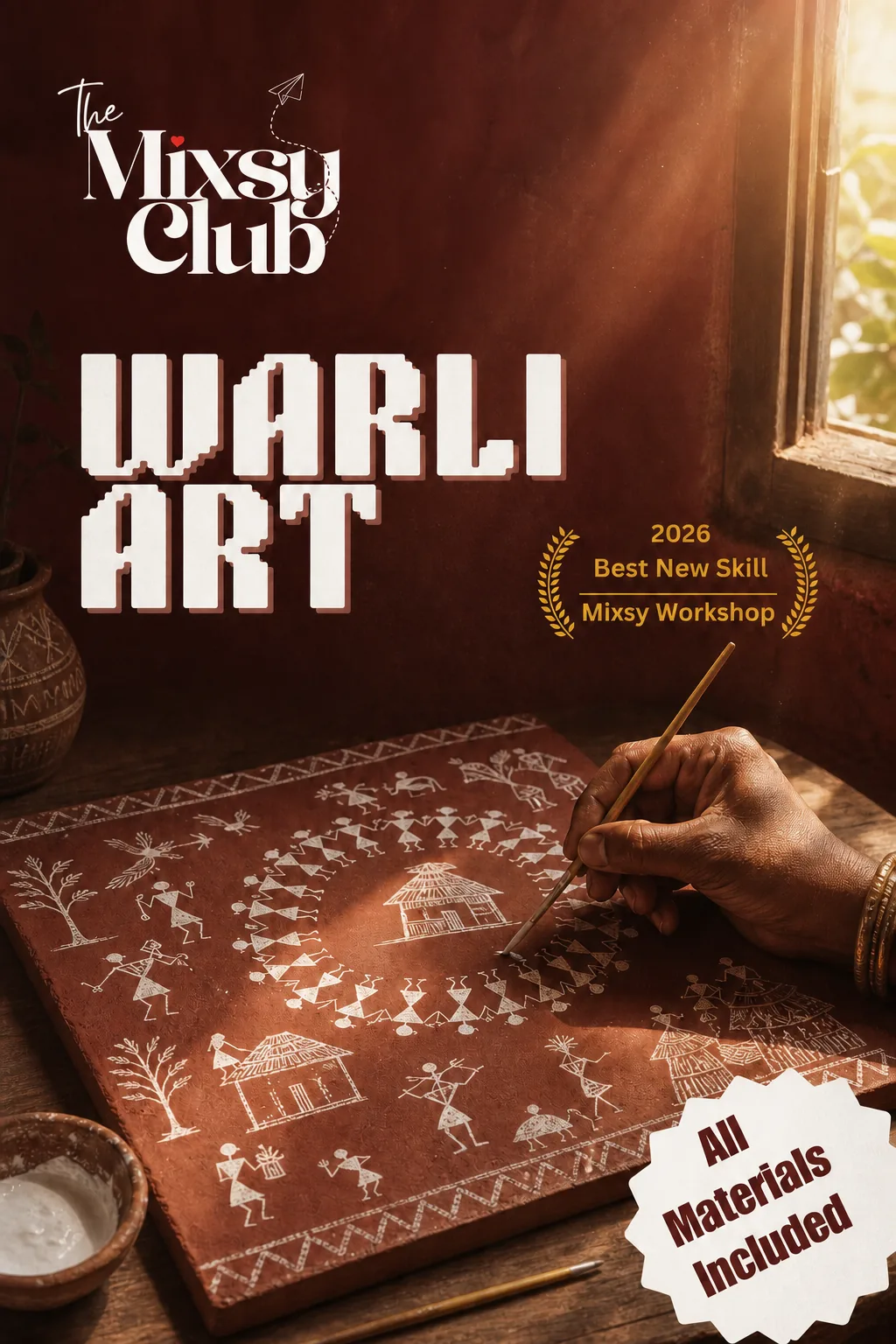
Worli Art
Create stunning Warli art with traditional patterns and your own storytelling twist
See dates & book →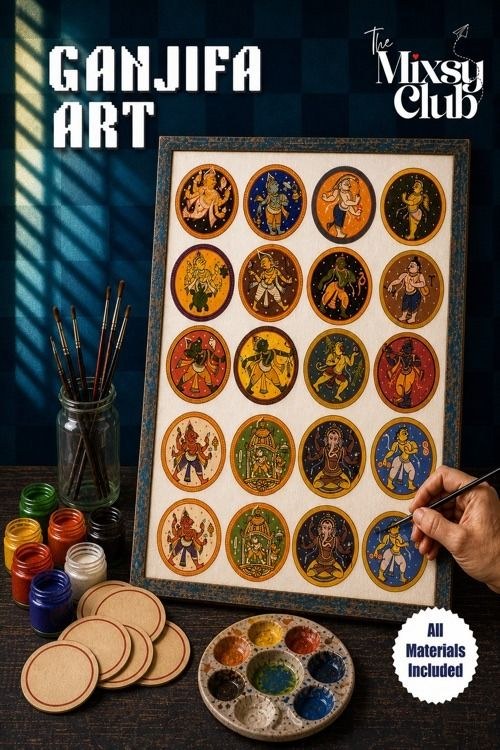
Ganjifa Art
Explore the colourful world of traditional Indian playing cards at our Ganjifa Art Workshop.
See dates & book →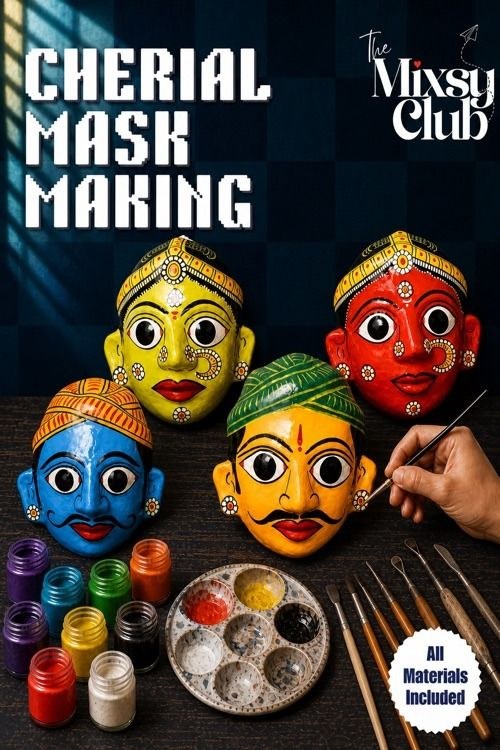
Cherial Mask Making
Step into the colourful storytelling traditions of Telangana at our Cherial Mask Art Workshop.
See dates & book →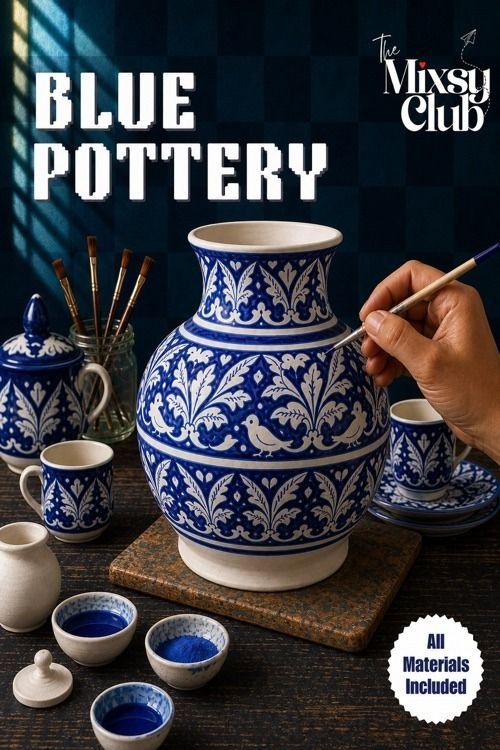
Blue Pottery Painting
Discover the charm of traditional ceramic decoration at our Blue Pottery Painting Workshop.
See dates & book →The forms, and where they come from
Madhubani from Bihar — bold outlines, packed patterns, symbolic animals. Kalamkari from Andhra — flowing lines and floral borders drawn with a pen. Pattachitra from Odisha — the intricate mythological scrolls. Pichwai from Nathdwara — lotus, cows and the temple motifs of Rajasthan. Warli from Maharashtra's own tribal belt — the white stick-figure storytelling on earthy ground. Ganjifa — India's circular hand-painted playing cards. Cherial from Telangana — painted storytelling masks. And Blue Pottery from Jaipur — cobalt patterns on white ceramic. Each session is one form, one finished piece.
How a session runs
The host starts with the form's history in five minutes, then draws the base pattern with you — grids, borders, the central motif — before the colour goes on. Traditional palettes are supplied, and the sequence is set so that the piece works even if your hand is not steady. You leave with a finished artwork on canvas, paper or (for Blue Pottery and Cherial) the object itself.
Timing, place, price
Weekend sessions at 1:30 PM and 3:30 PM at Rude Lounge, Ground Floor, Saraswati Kunj CHS, Jawahar Nagar, Powai, Mumbai 400076; a few of the folk-art sessions run on Sundays only — the event page shows the days. Prices are per person and include all materials. Book online; the ticket with QR code is emailed instantly. Groups get an automatic discount at checkout.
Questions people ask
Which Indian folk art is easiest for a beginner?
Warli and Madhubani — both are built from simple repeated shapes, so a first attempt looks like the real thing.
Do I need to be able to draw?
No. The host draws the base pattern with you, step by step; the sessions are designed for first-timers.
What do I take home?
The finished artwork — a canvas, a painted card, a mask or a decorated ceramic piece depending on the session.
Are the materials traditional?
Palettes and motifs follow each tradition; materials are studio-grade and supplied for the session.
Can I book several forms as a series?
Yes — book any combination of weekend sessions online; group discounts apply per booking.